
With its positive impact, kindness begets kindness

Concern about the future of planet Earth, and what alternative plans, if any, can be made to extend its longevity, have been subjects of discussion for quite some time now. Apart from measures aimed at conserving the integrity of the natural resources, such as land, water, and atmosphere, the possibility of mankind colonising planets in outer space has also been receiving serious attention
Kindness is the highest form of intelligence-Albert Einstein
As in every year, the World Kindness Day was celebrated on November 13. Initiated in 1998 by the World Kindness Movement, a coalition of the Kindness Organisations of 33 nations’, it is observed in many countries, including Canada, Australia, Italy, Nigeria and the United Arab Emirates. So does India. Singapore observed the day for the first time in 2009.
The observance is a gesture meant to promote the importance of being kind, compassionate, and empathetic, towards one another and to the world; to serve as a reminder that simple acts of kindness can create a powerful positive impact and unite communities; to encourage people to go beyond their daily routines; perform good deeds, fostering happiness and a more peaceful society.
The official theme for this year, “The simplest acts of kindness are far more powerful than a thousand heads moving in prayer”, is a quote of Mahatma Gandhi. It is expected to highlight the importance of kindness in global well-being, the emphasis in recent years has been on youth development, empathy, and actions that create a positive impact.
Kindness is a virtue extolled by people across faiths and countries. Unsurprisingly, the quality is commended in the holy scripts of several faiths.
For example, the story goes in the Bible that the Pharaoh, the ancient ruler of Egypt, decreed that all Hebrew male babies be drowned, out of fear that Israel would become too numerous and powerful, potentially becoming a threat to Egypt’s rule. By ordering the killing, he hoped to curb the growth of the Israelite population. Yocheved, the mother of Moses, decided to hide her newborn baby, by placing him in a wicker basket and hiding it in a strategic spot in the reeds along the banks of Nile River. The baby’s crying alerted one of the daughters of the Pharaoh, who took the baby and, defying her father’s order in an act of great compassion, raised him as her own son.
Similarly, the Quran contains numerous instances of kindness, emphasizing the need to honour parents, maintaining kinship with relatives, and providing for the needy.
Hinduism also glorifies the virtues of love, genuine care, and compassion, towards all living beings, through the principle of ‘Ahimsa’ or non-violence, the belief that advocates avoiding causing harm, either by speech or action towards any creature.
A seemingly innocuous and passive prescription which Gandhi turned into a weapon that forced the British imperialist regime to concede freedom to India.
Likewise, in Buddhism, kindness is a central practice called Metta (loving-kindness), which involves cultivating goodwill and compassion for all living beings, including the self.
Jainism also places the quality of kindness on a high pedestal.
There are many collections of tales which have had a powerful influence over the thinking of several generations. Some of them are Aesop’s fables and the Panchatantra tales.
Aesop’s fables, a collection of fables credited to Aesop, a slave and storyteller, who lived in Asian Greece between 620 and 564 BCE, there is this story about a lion and a mouse.
A powerful lion catches a small mouse, which has accidentally scurried over him. The mouse begs for mercy, and the lion, amused and feeling generous, decides to spare the tiny creature and let him go free. Sometime later, the lion is trapped in a hunter’s net. The mouse, upon hearing the lion’s cries, and remembering the earlier act of mercy, rushes to help. It gnaws through the thick ropes of the net until the lion is freed, proving that even the smallest of creatures can help the mightiest.
Another story, from the same collection, is about a herd of elephants and a community of mice. A herd of elephants, while searching for a new water source, unknowingly tramples a community of mice. When the mice request that the elephants take a different path to spare their lives, the Elephant King graciously agrees, despite the vast difference in their sizes. Months later, when the elephants become trapped in hunters’ nets, the mice return the favour by chewing through the ropes, freeing the elephants and proving that no act of kindness, however small, is ever wasted.
Kindness is also the theme which underlines many of the interrelated animal fables contained in the Panchatantra, a set of stories authored in 300 BCE by Vishnu Sharma in Sanskrit, in order to impart lessons in morality and practical wisdom in life. Many of the characters portrayed in the stories help others and demonstrate the qualities of empathy, generosity, and loyalty.
One central example can be found in the framing narrative involving the scholar Manisiddhudu and the cowherd Kotappa. The former needs a companion for his long and difficult journey to Kasi. After being rejected by many, Kotappa, an orphan, seeing Manisiddhudu’s desperation and loneliness, agrees to accompany him, as an act of companionship and profound kindness. But on one condition-along the way, he must be allowed to tell entertaining stories. By sharing stories, Kotappa not only entertains Manisiddhudu but also provides him with wisdom and a philosophical lens to view the world. His stories, filled with love, virtue, and morality, enrich his companion’s journey in a way that material or physical aid could not. Ultimately, Kotappa’s generous spirit and storytelling abilities prove to be a more valuable treasure than any worldly possessions. The tales and their lessons serve as a guide for both the travellers and the readers.
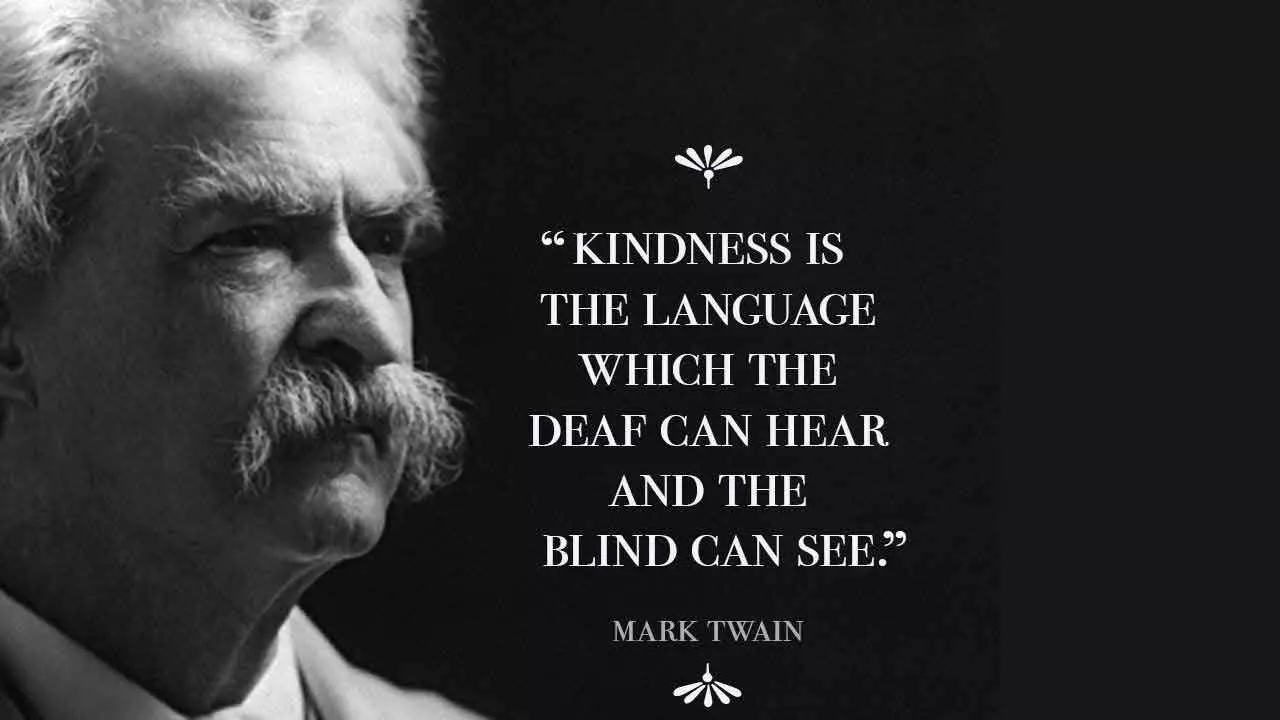
Little wonder, then, that Mark Twain said, “Kindness is the language which the deaf can hear and the blind can see”.
Among the various senses to which the word ‘kind’ lends itself, is the word ‘compensation’, standing for what is offered in the form of goods or services, instead of money, a practice that originated with the bartering system, followed by ancient metropolitan tribes around 6000 BCE.
Chanakya in his Arthasastra has advised against an overdose of honesty in rulers, especially in matters relating to external affairs. Similarly, kindness need not always stand for a positive trait in a person. Excessive kindness can also sometimes be a weakness.
For example, “Yet do I fear thy nature; It is too full o’th’milk of human kindness ……..,”, are the words spoken by Lady Macbeth in Shakespeare’s play ‘Macbeth’. Her husband is too compassionate and kind-hearted to take ruthless actions so necessary in order to become the King.
In a similar manner, “To kill with kindness”, another expression used by the inimitable Shakespeare in his play, ‘The Taming of the Shrew’, means to cause discomfort by treating a person in a way that is needlessly kind or helpful, or, by over indulgence, driving someone crazy by being excessively nice or polite. These illustrations serve to impart the lesson that there can be such a thing as too much kindness.
As the well-known saying goes, “Kindness without boundaries is a recipe for burnout.”
Kindness is an expression that occurs often in the writing of letters. The letters common in officialdom, in particular, have their own characteristic design. The official variety ends with “yours faithfully”, while the demi-official ones use the expression “yours sincerely”.
In the olden days, especially during the British Raj, letters, interestingly enough, ended with the expression, “I have the honour to remain, yours most obedient servant.” And, if the letter was about a request, that expression was preceded by “for which act of kindness, I shall forever remain grateful.”
Both of those expressions were typical of the servile approach of subordinate officials in the administration in those days, fortunately, no longer in use.
(The writer was formerly Chief Secretary, Government of Andhra Pradesh)


