
Ideas: The bedrock of progress

‘Idea’ is a versatile word, widely used as an idiom in different contexts. For example, “Get the idea,” stands for understanding the basic concept or meaning, “Get the wrong idea,” for misunderstanding something, “Have no idea,” for not knowing something or to be completely uninformed and “Not have the faintest idea,” for lacking knowledge in a particular context. Likewise, “What’s the big idea,” is used to express annoyance or ask for an explanation of some one’s actions, “Run with the idea” means to take a suggestion or idea and develop it further, “Flight of fancy,” refers to an imaginative but impractical idea, Harebrained idea, means a silly or foolish idea, “All in your head” stands for something that is imagined and not real and “Capital idea” means a brilliant or excellent idea
“An idea that is not dangerous is unworthy of being called an idea at all.” — Oscar Wilde
One often hears it said that it is ideas that make the world go round. A pile of rocks, for instance, ceases to be a rock pile, when one contemplates it with the idea of a cathedral in mind.
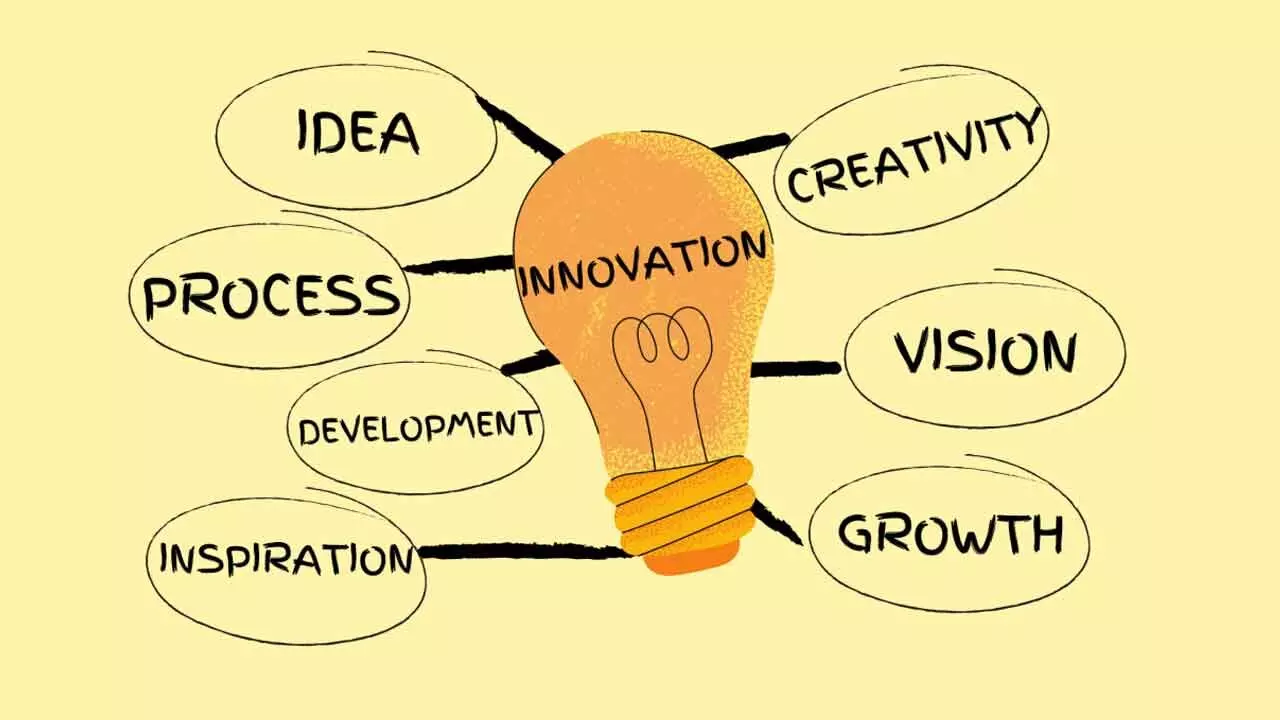
Ideas, when they resonate with a particular moment, can be more potent than any physical force. They are the bedrock of progress sparking new approaches innovative solutions to existing problems. Innovation, driven by ideas, leads to advancements in such diverse fields as technology, science, art, medicine and engineering.
Ideas also spur creativity and can drive changes, in the ways of thinking, that address existing challenges and shape the future. Sharing ideas can break down barriers, spark conversations, and inspire others to think differently, leading to collective growth. An ambience that promotes the nurturing and valuing of ideas helps foster a culture of innovation and progress that benefits individuals and society as a whole.
In business, original ideas can differentiate a product or service in a competitive market, helping them stand out and build a unique identity. Historical examples, such as the French Revolution, a movement inspired by the spirit of the slogan, “liberty, equality, and fraternity,” or the anti-slavery Abolitionist Movement in America, demonstrated how ideas, once they gain traction, can reshape societies, even when having to overcome stiff opposition.
Mahatma Gandhi’s concept of Ahimsa, meaning non-violence, was, similarly, a pivotal force in India’s struggle for independence and profoundly impacted global movements for social justice. By advocating peaceful resistance and civil disobedience, Gandhi mobilized millions to challenge British rule, ultimately leading to India’s freedom. His philosophy of Ahimsa, coupled with Satyagraha (truth force), demonstrated that non-violent resistance could be a powerful weapon against oppression.
Similarly, the legendary scientist Albert Einstein famously used ‘thought experiments’, also called ‘Gedanken’ experiments, to explore complex scientific ideas and develop his theories. One of his most well-known thought experiments involved imagining himself inside a falling elevator, an experiment which led him to develop the ‘Principle of Equivalence’, which states that the effects of gravity are indistinguishable from the effects of acceleration.
Several ideas in military history have also proved exceptionally successful. For example, the ‘Trojan Horse’ story narrates of how the Greeks constructed a large wooden horse, concealing Greek soldiers, as a ruse to infiltrate Troy, an ancient city located in modern- day Turkey. They then left it outside the gates of Troy, and pretended to sail away.
Mistaking the wooden horse for a peace offering, the Trojans brought itinto the city. And at night, the soldiers emerged from it, opened the city gates and allowed the rest of their army inside, to conquer Troy.
Likewise, the German army, during World War II, employed a strategy known as ‘blitzkrieg’, or a rapid concentrated attack, using combined arms, aiming to overwhelm and disorient the enemy, through speed and surprise.
Both were examples of strategic and tactical brilliance. As were the development of gunpowder and its application to weaponry. Innovations such as the radar and the atomic bomb also significantly altered the course of warfare.
Likewise, in the of realm of medical science, Germ Theory, which revolutionised our understanding of disease by establishing that many illnesses are caused by micro organisms, was arguably one of the most revolutionary ideas in medical history.
The idea, developed primarily by Louis Pasteur and Robert Koch in the late 19th century, shifted the focus, from ‘miasma’ or ‘bad air’, to the microscopic world of bacteria and other pathogens. That understanding led to the development of crucial medical practices, such as sanitation, pasteurization, and vaccination, transforming public healthregimes and drastically reducing the impact of infectious diseases.
‘Idea’ is a versatile word, widely used as an idiom in different contexts. For example, “Get the idea,” stands for understanding the basic concept or meaning, “Get the wrong idea,” for misunderstanding something, “Have no idea,” for not knowing something or to be completely uninformed and “Not have the faintest idea,” for lacking knowledge in a particular context.
Likewise, “What’s the big idea,” is used to express annoyance or ask for an explanation of some one’s actions, “Run with the idea” means to take a suggestion or idea and develop it further, “Flight of fancy,” refers to an imaginative but impractical idea, Harebrained idea, means a silly or foolish idea, “All in your head” stands for something that is imagined and not real and “Capital idea” means a brilliant or excellent idea.
There are also other usages of the word ‘idea’, with “Bright idea” standing for a good or clever idea and “The very idea” being an idiom that emphasizes the concept or thought of something, often with a strong emotional reaction, either positive or negative. “Do you have any idea what”, similarly, refers to asking for someone’s thoughts, knowledge, or opinion on a particular subject or situation and can be used to express curiosity, seek assistance, or even convey a sense of frustration or disbelief.
‘Ideation’ refers to the process of developing and conveying prescriptive ideas to others, typically in a business setting, and describes the sequence of thoughts, from the original concept to implementation. Ideations can spring forth from past or present knowledge, external influences, opinions, convictions, or principles, and can be expressed in graphical, written, or verbal terms.
“What an Idea, Sir-ji!” is a famous advertising tagline used by the Idea Cellular company, which is known for campaigns promoting innovative solutions to social issues. The phrase has become immensely popular, as an idiom, since it was first used, and is often used to highlight creative problem-solving, especially when applied to everyday challenges.
“No power on earth can stop an idea whose time has come,” said Victor Hugo in his legendary novel, “Les Misérables”. The statement emphasises the unstoppable force of a well-timed and relevant idea. It suggests that when an idea aligns with the prevailing social, cultural, or historical context, it becomes virtually unstoppable, gaining momentum and driving change.
All the events referred to earlier in this piece, the French Revolution, the Abolitionist Movement, the Ahimsa concept, the discoveries of the Theory of Relativity and the Germ Theory, were classical examples of the awesome power Victor Hugo was referring to.
It was Albert Einstein, again, who, in the most endearingly captivating manner, described the discipline of pure mathematics as, “……. in its way, the poetry of logical ideas.”
Although not quite relevant to the context of this piece, here is a snippet to the end it on a note of humour. There is this lady who is going to her mother’s place for a break. While leaving, she warns her husband against any misconduct in her absence. She then takes a glass tumbler and throws it on the ground, breaking it into pieces, and says to the husband, that that is how her heart would be, if the husband did not heed her advice.
And the husband, bending down and picking up the pieces of the broken glass, tells her that, just as the damage done by her could be cured by procuring a new tumbler, he could do well do the same, in his wife’s absence. And the wife calls off her trip!
(The writer was formerly Chief Secretary,
Government of
Andhra Pradesh)


