
‘Division’ between rational and the superstitious is in one’s mindset
Superstitions about eclipses are known even in other parts of the world, involving fears of cosmic battles and animals consuming the sun, foreboding evil consequences. An interesting manifestation of the faith people place in pseudoscience, is the superstition attached with lucky numbers and lunar cycles.
Even in this digital era, marked by the emergence of artificial intelligence, many people, with an otherwise rational and scientific bent of mind, still swear by beliefs and practices of pseudoscience. Such as omens, for instance, good or evil, wearing rings with precious stones, attaching significance to the appearance of celestial objects, and the choice of auspicious and inauspicious times for performing important rituals.
In many cultures, particularly the Hindu culture, for example, much significance is attached to the identity of a person whom one encounters, while leaving one’s home.
A married woman with a kumkum on her forehead, or a person carrying a pot of water or milk or flowers, are considered auspicious ‘yeduru’, or encounter. Also, in most cultures, a ladybug flying into one’s home or a shooting star appearing in the sky are considered events symbolising the likelihood of good fortune soon.
Telugu speaking people, for exceptionally lucky persons, A person who hits the jackpot in a lottery or has passed an examination that one was not sure of is believed to be impossible, are something which Telugus believe that the individual must have stepped ‘over the tail of a fox’.
Likewise, a black cat crossing one’s path, or a lady with loose and unkempt hair, and someone close by sneezing just as one is about to do something good, are considered inauspicious. Elsewhere, the bad luck omens include putting bread upside down in Italy, wearing clothes inside out in Russia or flipping a fish in China.
Quite ironically, Islam forbids placing faith in omens, while Christianity advocates faith in God rather than belief in omens.
Up to the 16th century, comets were believed to be bad omens, which foretold catastrophic events such as wars, famines or the death of a leader.
In Hindu mythology, in Parashara – Samhita, an ancient astronomical text, one comet is believed to have foretold the occurrence of a great deluge, while another was seen as a forewarning of a flood that necessitated the appearance of Lord Vishnu as ‘Matsya Avatara’, or in the shape of a fish, to save Manu, the progenitor of mankind and to save Vedas from Somaka who had stolen them. The Hailey comet was in 1066 seen as a terrifying bad omen. It was followed by the Battle of Hastings, where Harold was killed.
There is a widespread belief across cultures that lunar cycles influence human behaviour and events. People believe that crime increases on a full moon day, as crime and madness increase. In fact, mentally deranged persons are also called lunatics. Luna in Latin stands for moon. It is believed, for example, that Pournami, or the day of the full moon, is a spiritually significant occasion for the Hindus, Buddhists and Jains, as it symbolises spiritual renewal and emotional and mental clarity.
For the Hindus, the full moon day of the Visakha month of the Hindu calendar, is linked with Veda Vyasa. In Buddhism, Buddha Purnima marks the birth of Gautama Buddha as well as the day on which he delivered his first sermon. Called as Guru Purnima by Jains, it also marks the day when Gautam Swamy, Lord Mahavira’s first disciple, joined him in initiating the Jain monastic order. Karthika Purnima, marking the end of the monsoon period, is a significant time for festivals and spiritual activities.
Meanwhile, for many cultures, especially the Telugus, the day of the new moon is considered a bad time for new ventures, while in stark contrast it is considered quite auspicious by Tamilians. This is ostensibly because Telugus are guided by the lunar calendar and Tamils by the solar counterpart.
Quite common, also, are superstitions about eclipses. Lunar eclipses bring along fears about harmful effects for pregnant women, contamination of food and water, bad luck and possible occurrence of natural disasters. In fact, in some cultures, particularly in India, utensils are purified, to the extent of even being exposed to raw fire, after a lunar eclipse, before being used again
Similar superstitions about eclipses are known even in other parts of the world, involving fears of cosmic battles and animals consuming the sun, foreboding evil consequences.
An interesting manifestation of the faith people place in pseudoscience, is the superstition attached with lucky numbers and lunar cycles. The Chinese, for example, rely heavily on the luck that numbers bring and follow the lunar calendar to determine auspicious timings, especially at the beginning of the Chinese New Year.
Another practice, which has roots in astrology, ancient traditions, or wordplay, is in the choice of auspicious times or periods. They strongly influence timings of weddings and business ventures, observing rituals, conducting functions and celebrating festivals like Diwali and Baisakhi. In Hindu and Jain cultures, it manifests itself as the concept of a Muhurta, an auspicious time, based on the positions of the stars, sun, moon, and planets generally used by astrologers. It is very common in marriages.
The Brahma Muhurta, or the time of about 96 minutes before sunrise, is considered especially beneficial for meditation and worship. Conversely, more so in the southern states, Rahu Kaalam, an inauspicious 90-minute daily period in Vedic astrology, is generally avoided for starting new or important tasks. So steeply rooted is this belief rooted in the psyche of south Indians, that this columnist has known drivers of engines of trains to start the engine a few minutes before Rahu Kaalam is due to set in, stop again, and then commence the regular journey on the conclusion of the 90 minutes!
Those set to construct a building swear by Vastu Sastra, or the ancient Indian discipline of architecture and design, which belongs to the field of geomancy, and aims to create harmonious living in working spaces, by balancing the five fundamental elements, of earth, water, fire, air, and space (the sky), – also known as the Pancha Bhutas, aligned with cardinal directions. This is supposed to enhance flow of positive energy within the building, leading to improved health, wealth, prosperity, and overall well-being.
This columnist has, in his experience, known Chief Ministers of Andhra Pradesh abandoning one building in the state secretariat, in preference to another, to comply with the requirements of Vastu Sastra following the advice of pandits.
On a similar track are the Chinese belief in Feng Shui and the Japanese follow Fusui, an adaptation of Feng Shui that also focuses on energy flow within proposed buildings.
The preceding discussion may have left the reader with the impression that people with a rational approach laugh away the significance of practices arising from trusting in pseudoscience, while those who blindly follow rituals and superstitions may have no great faith in the scientific method.
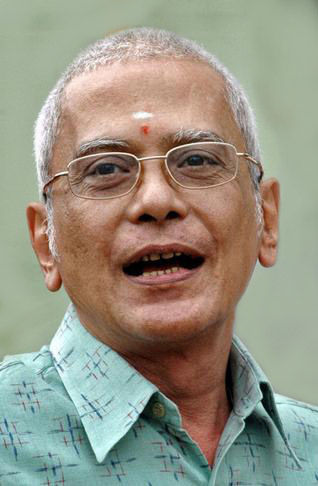
How such thinking can be fallacious is best illustrated by my distinguished sambandhi Jayateertha Rao. He retired as a highly regarded member of Dr Abdul Kalam’s team and was part of the effort that led to the successful Pokhran nuclear test, as well as other important programmes undertaken by DRDO at Hyderabad. Simultaneously, he is a scholarly exponent of vedas and upanishads apart from being the author of many widely read religious books.
His adherence to the prescriptions of vedic rituals and protocols is meticulous. So much, then, for the sharp division between rational and the superstitious!
(The writer was formerly Chief Secretary, Government of Andhra Pradesh)


