
Bihar -The seat of great democracy

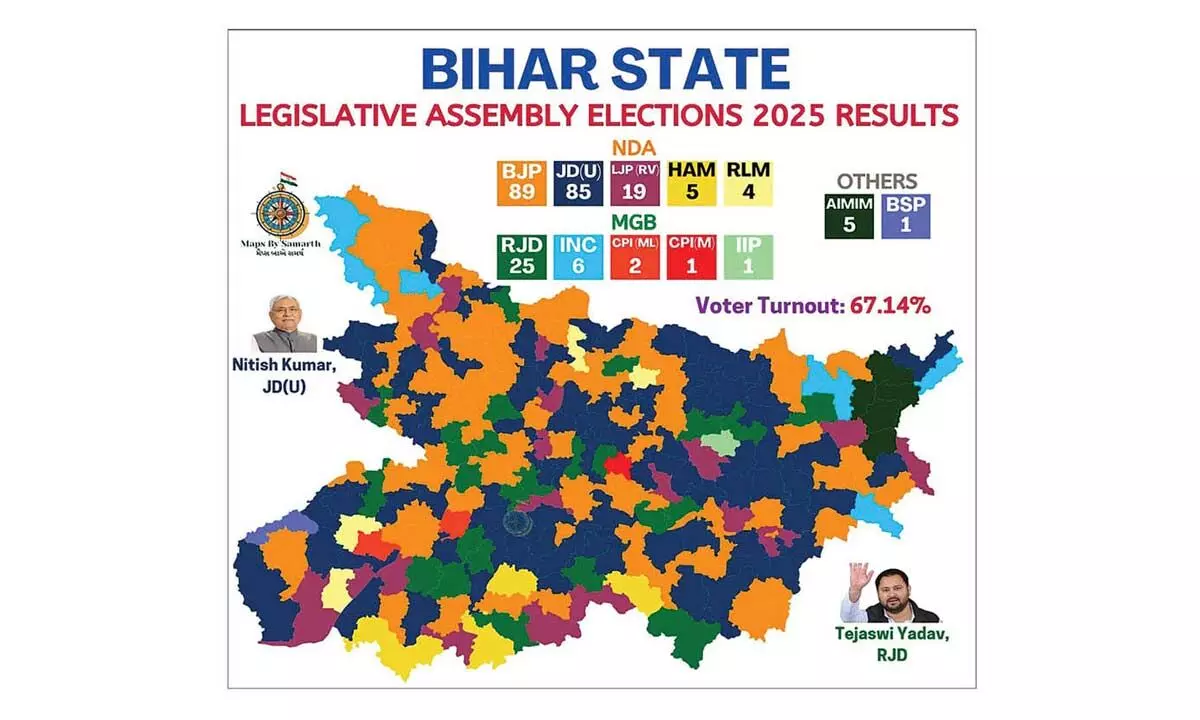
First and foremost, I am not a pollster, political analyst or a politician, but an ordinary citizen of the country keenly interested in politics. I very diligently followed the election results in Bihar and felt that at the end of the day democracy triumphed, an observation that took me back in time by several centuries, in fact.
Bihar is called the “the seat of democracy” due to the ancient Vajjian Confederacy or Licchavi Republic, centered in the city of Vaishali (in present day Bihar), which is considered as one of the world’s earliest examples of a republic, existing as early as the 6th century BCE predating the Athenian democracy in Greece. The Confederacy was an alliance of several clans (including the powerful Lichhavis, the Jnatrikas, and the Videhas) that practiced a system of non-monarchical collective governance.
The Bihar poll results reflect a shift in voter priorities. Voters favoured progress over divisive politics indicating a maturing democracy. Young and the elderly prioritised honesty and development, moving away from dynastic politics. The people of Bihar have spoken loud and clear—they want peace, progress and good governance. They rejected gunda raj and instead craved for stability and progress. The message to politicians is loud and clear; focus on service, not shortcuts. In doing so, the voters have shown remarkable erudition!
The results suggest that caste and religion played a lesser role in shaping voter preferences. Despite being significant factors in the state’s politics, they did not seem to dominate the narrative. The electorate displayed a mature decision-making astuteness that went beyond religious and caste equations, which were two of the most critical components of any elections in the State. This streak revealed a new-found shift in its electoral dynamics. The results, I am sure, hint at a broader trend—a desire for unity and advancement that transcend regional and communal lines. It is a reminder that, despite our differences, we are all part of a larger Indian narrative. The focus on development and good governance suggests that voters are embracing a shared vision for India’s future; united under one flag.
The unprecedented ‘tsunami’ suggests that women’s dignity and safety resonated with female voters. The role of freebies and the announcement of Rs 10,000 likely had some impact, but it looks like they looked beyond these incentives. Their focus on good administration and growth suggests that they are prioritising long-term benefits over short-term gains. Women’s reservation in panchayats has been a significant step towards empowering women in Bihar, and this factor did probably play a role in the elections as did the incumbent government’s efforts to increase women’s representation in local governance. The government’s decision to impose prohibition, aimed at reducing social evils, seem to have influenced voters mindset. That the voters are keeping their eyes and ears wide open to the things happening around them was also amply on show, indicating that they can no more be taken for a ride.
The most important less one can draw from the eventual outcome is that anti-incumbency is not a hard- and- fast rule. The voters seem to have made a nuanced decision, weighing the incumbent government’s performances against the alternatives. This indicates that the voters are making informed choices, rather than simply voting against the incumbent. Anti-incumbency might be more of a narrative than a universal trend. People’s confidence in the democratic process is paramount. Unnecessary controversies like SIR and ‘chori’ eroded trust and distracted from the real issues. When voters feel their voices are heard, it’s a win-win for democracy. The focus should be on addressing their concerns and aspirations.
Leaders, who stayed grounded and connected with the people and their issue. fared better. It is all about understanding the pulse of the people and working for their welfare, rather than projecting an image of superiority. Sky is the limit when you are in touch with ground realities.
Voting was being celebrated in Bihar. The people broke all records. They decided between liability and asset. Bihar’s voters reaffirmed their faith in credibility, progress (Vikas), heritage (Virasat), and culture (Sanskruti). This win paves the way for accelerated growth and development.
Bihar is poised to move forward, driven by the momentum of this verdict, The future, indeed, looks bright!


