
Justice Surya Kant has his task cut out

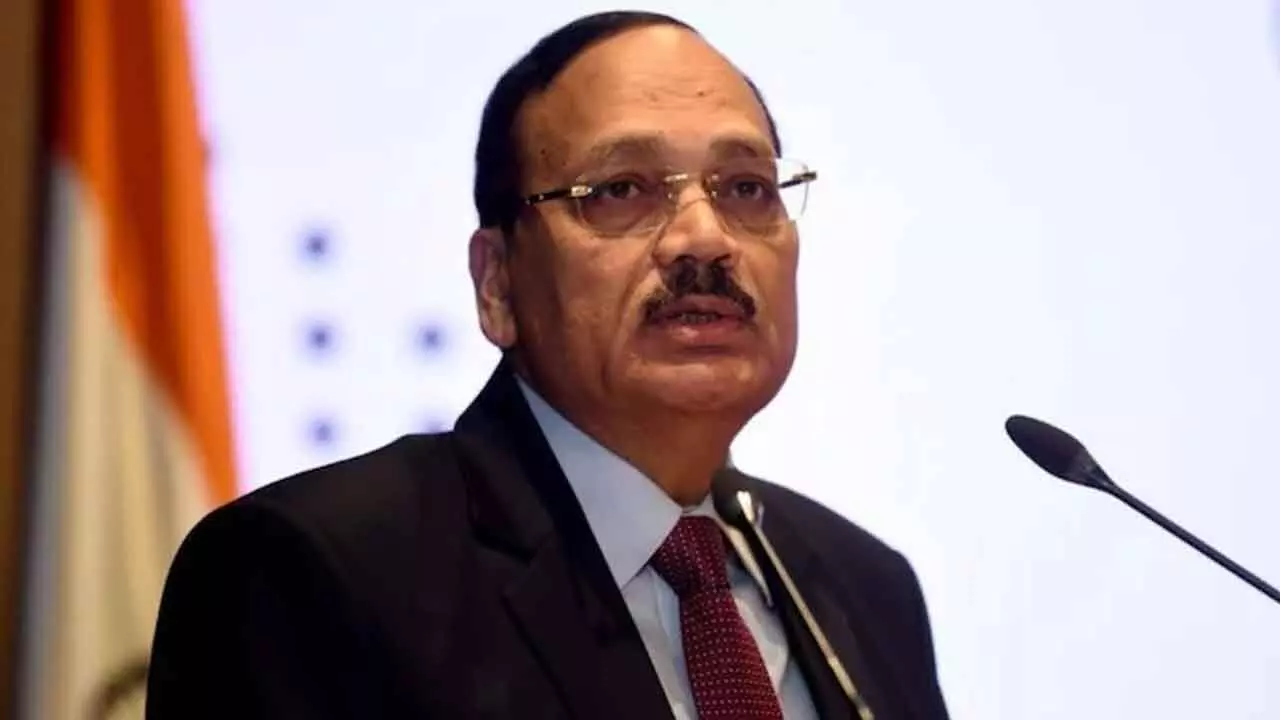
November 24 of this year has opened a new chapter to the glittering career of Justice Surya Kant, who on Monday was sworn in as the 53rd Chief Justice of India (CJI). It marks a momentous day for the small-time lawyer from a Hisar-based middle class family, who rose through the ranks during a highly distinguished journey that took him to the pinnacle of the Indian judiciary. In keeping with his new stature, he gave an indication of what is in store with him as the captain of the country’s judiciary a couple of days before occupying the exalted seat.
Taken at face value, it reveals that he would pursue a path that will not only help streamline the system in whatever manner he could possibly do but also cleanse the bane that haunts the profession-addressing the long pending cases, whose figures are quite overwhelming. Even if one goes by his articulate and speedy verdicts , a hallmark of his career, it is seemingly improbable to resolve all pending cases, considering that he has only 15 months before demitting office on February 9, 2027. Given a choice, however, he can ease the burden to considerable levels much to the relief of millions of litigants, who have been bearing the brunt of inordinate delays for decades together.
One can take comfort from the fact that he means business as regards the targets he has set for himself while in the hot seat. Integral to over 300 benches since his elevation to the Supreme Court, he has deftly handled landmark cases, including Article 370 abrogation, Bihar electoral roll revision, Timeline for assent to Bills, Sedition law, upholding the ‘One Rank, One Pension’ (OROP) scheme for ‘its constitutional soundness’ and being on the 2021 bench that dealt with the alleged Pegasus spyware surveillance, among several other such historic judgements. It is worthwhile to recall the erudition behind his observations during the Jharkhand High Court’s Silver Jubilee celebrations in Ranchi.
He contended that High Courts should envision institutional development on the lines of a hospital that designs its emergency services with structures capable of responding promptly, decisively, and accurately in times of crisis. “Only such a foresight can help provide timely and effective solutions with the speed and clarity that a constitutional democracy demands.” This sums up the mindset of the legal luminary, who believes in going by the Constitutional provisions and who has often said that corruption undermines governance and public trust.
The odd setbacks notwithstanding, the CJI’s roadmap to handle future challenges is in place. He is serious about addressing and clearing the Supreme Court’s backlog (running into 90, 000 pending cases), even as he is in favour of mediation for dispute resolution, as a way out to close cases. He made it clear that he would focus on cases that are stuck in the lower courts, given that the related matters are pending before the apex court. “I will ensure that benches are constituted to address pending cases,” is how he intends to handle the issue.
Even as he was keen on the promotion of mediation as a way out, Justice Surya Kant was apprehensive of the manner many litigants approach the Supreme Court directly, bypassing High Courts. As one who championed the cause of grassroots democracy and gender justice, he was for resolving matters at the lower court level to the maximum possible extent. All eyes will now be on how Justice Surya Kant handles cases vis-à-vis the ambitious targets he has set for the courts .


