
Commitment to Constitution must reflect in reality

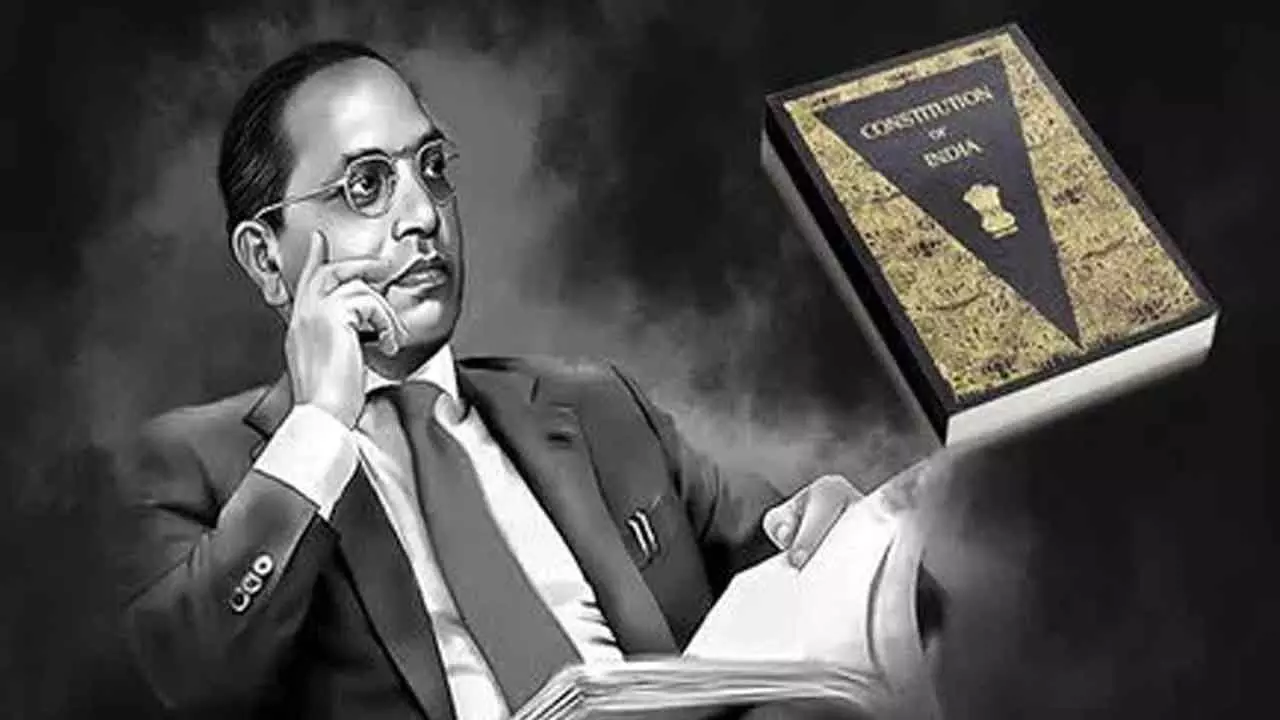
Ideally, Prime Minister Narendra Modi’s letter to the nation on the occasion of Samvidhan Diwas (Constitution Day) should sensitise our politicians about the lofty idealism of the Constitution. Expressed in the Preamble, the Constitution intends “to secure to all its citizens: JUSTICE, social, economic and political; LIBERTY of thought, expression, belief, faith and worship; EQUALITY of status and of opportunity; and to promote among them all FRATERNITY assuring the dignity of the individual and the [unity and integrity of the Nation…”
If our political masters honestly introspect, they will realise that they have failed on almost all counts. The justice system is in shambles, with pendency rising and higher courts exposing the miscarriage of justice. And yet, judicial reforms are nowhere on the agenda of any major political party.
Social justice has become just a ruse to divide society on caste lines and demand reservations on one ground or the other. As for economic justice, the woes of wealth creators—be it businesspersons or farmers—are seldom addressed in earnest.
About freedom of thought, expression, and faith, the less said the better, what with the sphere of liberty shrinking with every passing day. Filmmakers, stand-up comedians, journalists, etc., are regularly harassed legally by the authorities under the BJP as well as the non-BJP governments. In general, both free speech and civil liberties are being curtailed. Against the backdrop of rickety judicial, police, and administrative systems, it is prodigiously sanguine to hope for equality and fraternity.
Cynicism is no longer the most popular ‘ism’ that all political parties follow; it is also becoming the defining feature of the general mood. Therefore, PM Modi’s letter is unlikely to change the hearts and minds of those who matter. It can help the Bharatiya Janata Party and its ideological parent, the RSS, though. It is a well-known fact that a large section of Dalits suspect that the ruling dispensation is working against their interests. The saffron establishment wants to undo or severely curtail the Constitution—which they believe was made by B.R. Ambedkar—thus doing away with the protections embedded in the Constitution.
The perception may or may not be true, but it has hurt the BJP electorally. Dalit disaffection played a major role in bringing down the BJP tally to 240 in the 2024 general elections. The letter may be addressed primarily to the discontented Dalits. By invoking the Constitution, even going to the extent of calling it a sacred document, and lavishing fulsome praise on Ambedkar, perhaps Modi seeks to assuage Dalit fears and misgivings; he wants to assure them that the government is a custodian, not a challenger, of their rights.
Constitution Day messaging serves as an outreach tool: a signal that the BJP respects constitutional morality and is committed to safeguarding social justice as envisioned by the architects of independent India. The letter may thus be addressed more to electoral anxieties than to governance priorities—aimed at healing a widening trust deficit.
There is nothing wrong with political communication; democratic legitimacy requires dialogue with all sections of society. However, the real test lies not in eloquent appeals to constitutional ideals but in concrete action that upholds them. Justice must be swift and fair; liberty must expand rather than contract; equality should translate into genuine opportunity; and fraternity must strengthen unity without erasing diversity.


